Sustainable Commuting Plan (SCP) for Salica Industria Alimentaria S.A.
Client

Salica Industria Alimentaria S.A
Project
Diagnosis and action plan for a Commuting Plan.
Objectives
Reduce the negative impact of commuting to the workplace through a more efficient and rational use of different transport modes.
Ingartek Service
Work Performed
Problem
Ingartek carried out for Salica Industria Alimentaria S.A. a commuting analysis and planning project aimed at progressing towards compliance with requirements related to sustainable mobility and commuting.
Such projects are now especially relevant with the entry into force of Law 9/2025 on Sustainable Mobility, which requires companies and organizations to implement a Sustainable Commuting Plan (SCP) and plan their workplace commuting.
The project made it possible to analyze employees’ commuting habits and define measures adapted to the mobility reality of the environment and the organization itself.
The Challenge
One of the main challenges of the project was the high dependency on private vehicles for commuting, driven by free parking availability and existing limitations in the surrounding public transport options.
Additionally, factors such as schedules, travel flexibility, or certain mobility habits made it difficult to implement more sustainable alternatives among employees.
At the same time, the analysis also identified real opportunities for improvement, as a significant portion of the staff lived near the workplace, opening up the possibility to promote walking, cycling, or car sharing.
Mobility Analysis and Diagnosis
For the project development, Ingartek conducted a detailed commuting analysis of the organization through:
- Mobility surveys for employees
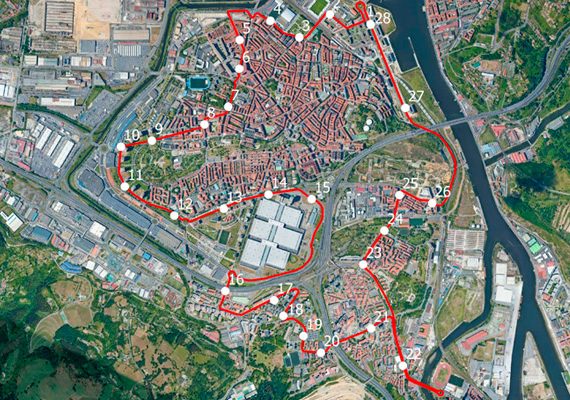
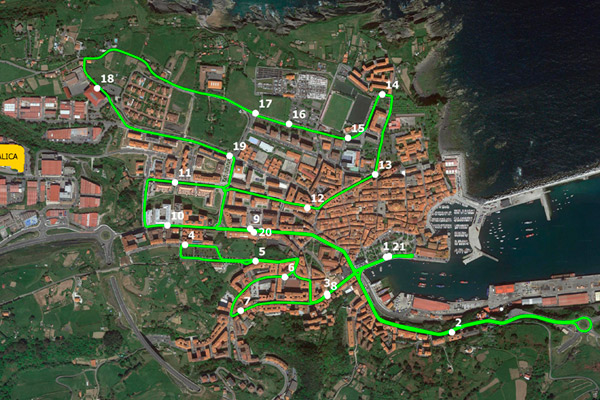
- Commute and accessibility analysis
- Study of mobility habits
- Analysis of public transport and surroundings
- Evaluation of improvement opportunities
The diagnosis identified the main commuting patterns, detected limitations related to sustainable mobility, and analyzed potential measures adapted to the operational and geographic reality of the workplace.
Furthermore, the project included a participatory process aimed at involving employees during different phases of the development of the Sustainable Commuting Plan (SCP).
Proposed Solution
Based on the analysis, Ingartek developed a Sustainable Commuting Plan (SCP) tailored to the organization’s real mobility needs.
The project defined various measures aimed at improving commuting and facilitating more sustainable and viable travel alternatives for employees.
Among the actions proposed were:
- promotion of walking and cycling
- promotion of car sharing
- awareness and sensitization actions
- improvement proposals related to public transport
- planning and monitoring of implemented measures
Additionally, a progressive action plan was defined to facilitate the future implementation and evolution of the SCP.
Project Outcome
The project allowed Salica Industria Alimentaria S.A. to gain a detailed understanding of its organization’s commuting patterns and identify real improvement opportunities tailored to the needs of the environment and employees.
The analysis facilitated the definition of viable measures aimed at improving commuting, reducing private vehicle dependency, and moving towards a more efficient and sustainable mobility model.
Furthermore, the project established structured planning aligned with the new requirements related to Sustainable Commuting Plans (SCP) and commuting management in organizations with high travel generation.
Related Articles
Project Image Gallery
Source: lavozdegalicia.es